Coppola
We put Coppola Wines in front of its next generation of drinkers.
Traditional wine was losing ground with younger Americans choosing new drinking occasions and experiences. Coppola Diamond Collection needed to turn strong awareness into relevance to reach its next generation of drinkers. For its first national brand push, we identified the premium-minded millennials most important to its future and built a market presence around how they actually consumed content, putting Coppola into expected and unexpected parts of their lives.

+8.9%
lift in favourability
+8.2%
lift in purchase intent
$123k
attributable purchase intent value

Opportunity
Coppola Diamond Collection was well known, but not well chosen.
The U.S. wine category was losing momentum as younger consumers changed what they drank and where they spent discretionary income. Adults 25–44 were exploring low- and no-alcohol alternatives, pressuring traditional wine brands. Coppola entered this shift with high awareness and positive perceptions, but an aging consumer base. For its first national campaign, we needed to find where younger, premium-seeking drinkers spent their attention, then make Coppola feel at home there.
Solution
We turned an audience mindset into a media strategy built around real behavior.
Our insight was simple: younger consumers may be drinking less often, but they still invest in meaningful, premium moments. Wine could earn a place by making those occasions feel more indulgent, memorable and worth choosing.
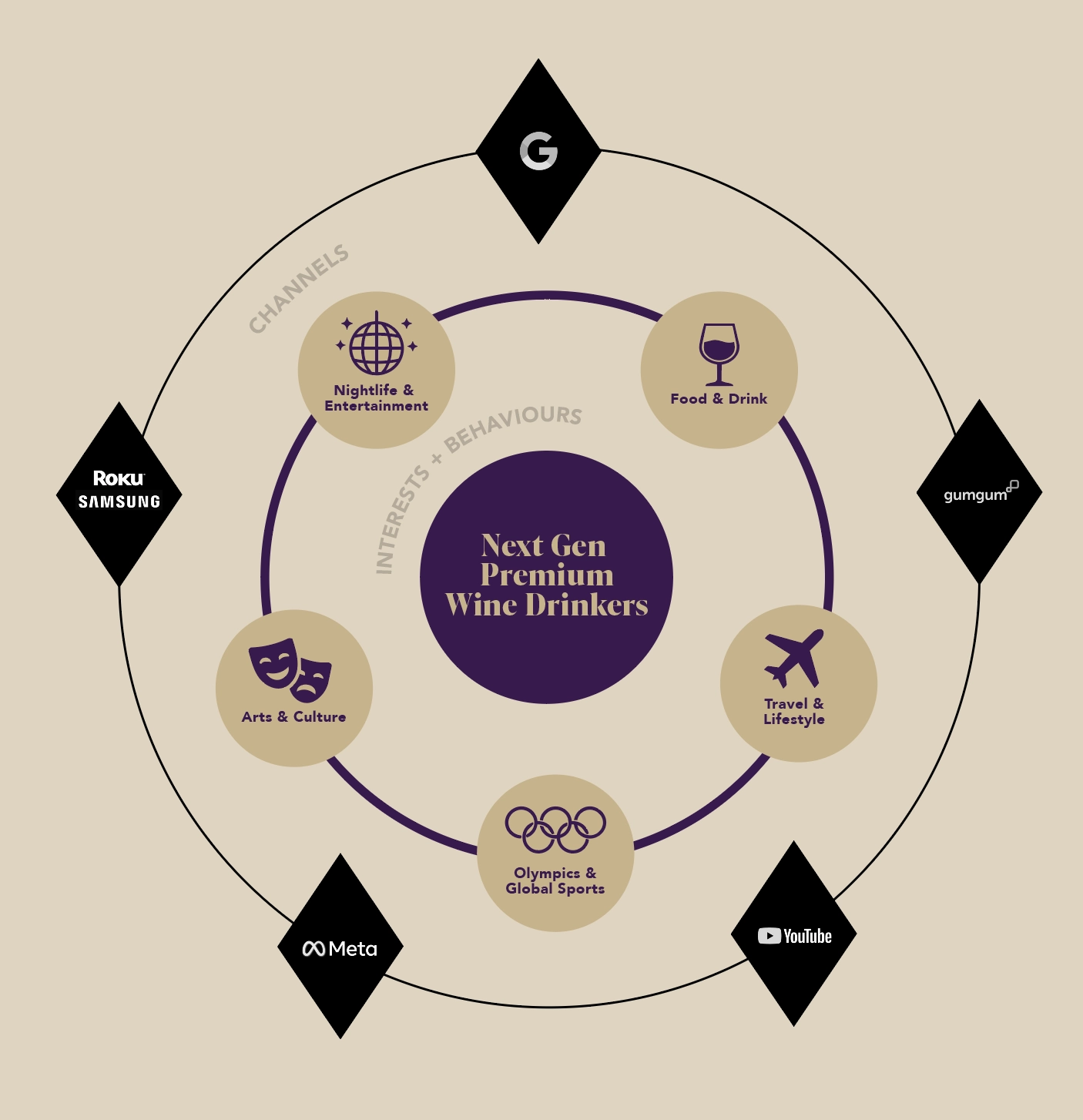
We built Coppola’s market presence around five cultural entry points where those moments naturally took shape: Nightlife & Entertainment, Arts & Culture, Food & Drink, Travel & Lifestyle, and Olympics & Global Sports. That took us beyond traditional wine environments and into the content our audience was already choosing to engage with. Video, social, programmatic and publisher partnerships built presence across those spaces, while purchase data and shoppable retail links connected inspiration directly to purchase.


Impact
A national campaign turned recognition into active consideration.
The campaign gave Coppola a presence built around its future audience while protecting existing equity, establishing a model for turning recognition into consideration: the right audience, the right environments, and a contemporary reason to choose.
“Understanding our current drinkers gives us the blueprint to tailor our approach.”
Coppola post-campaign report